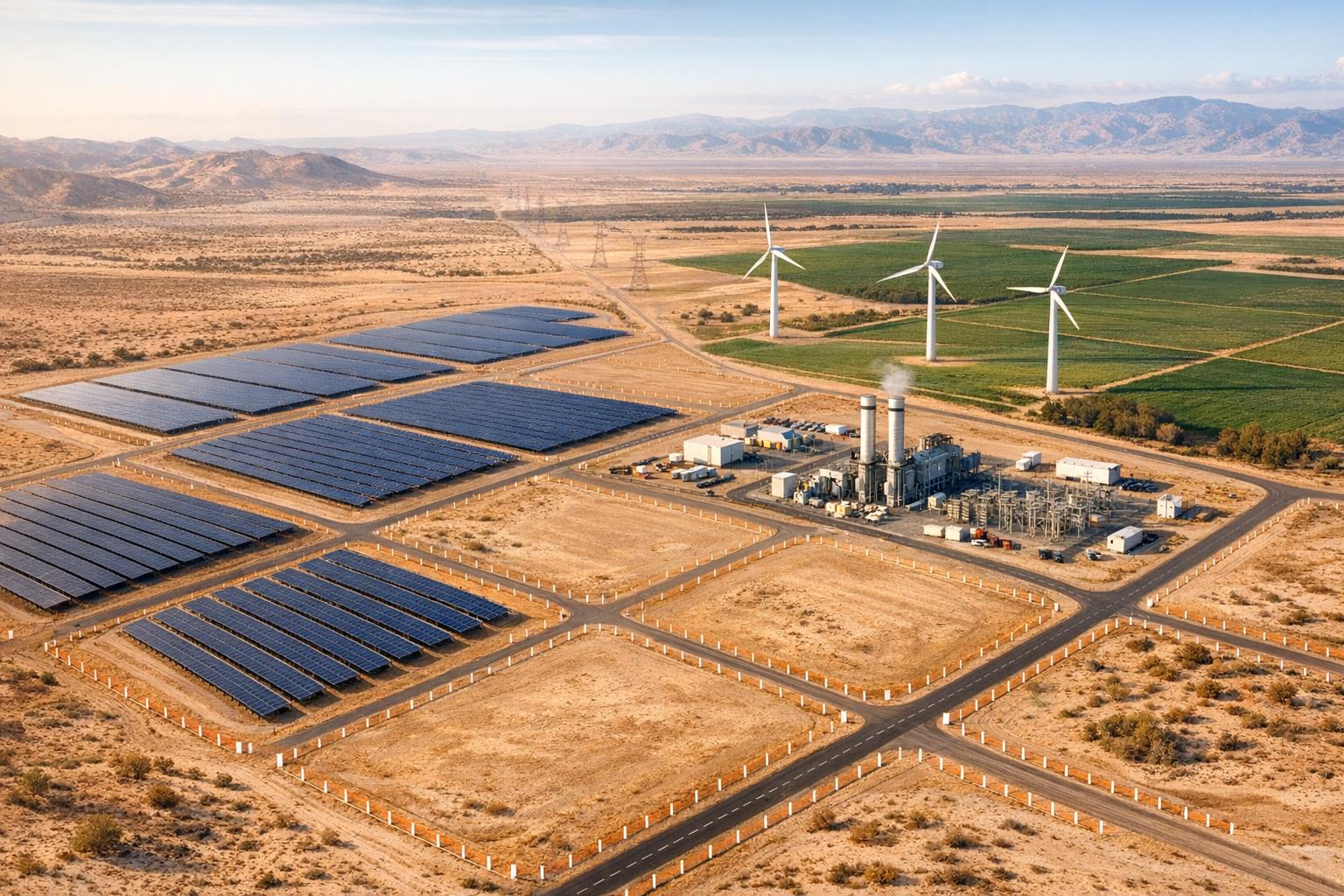
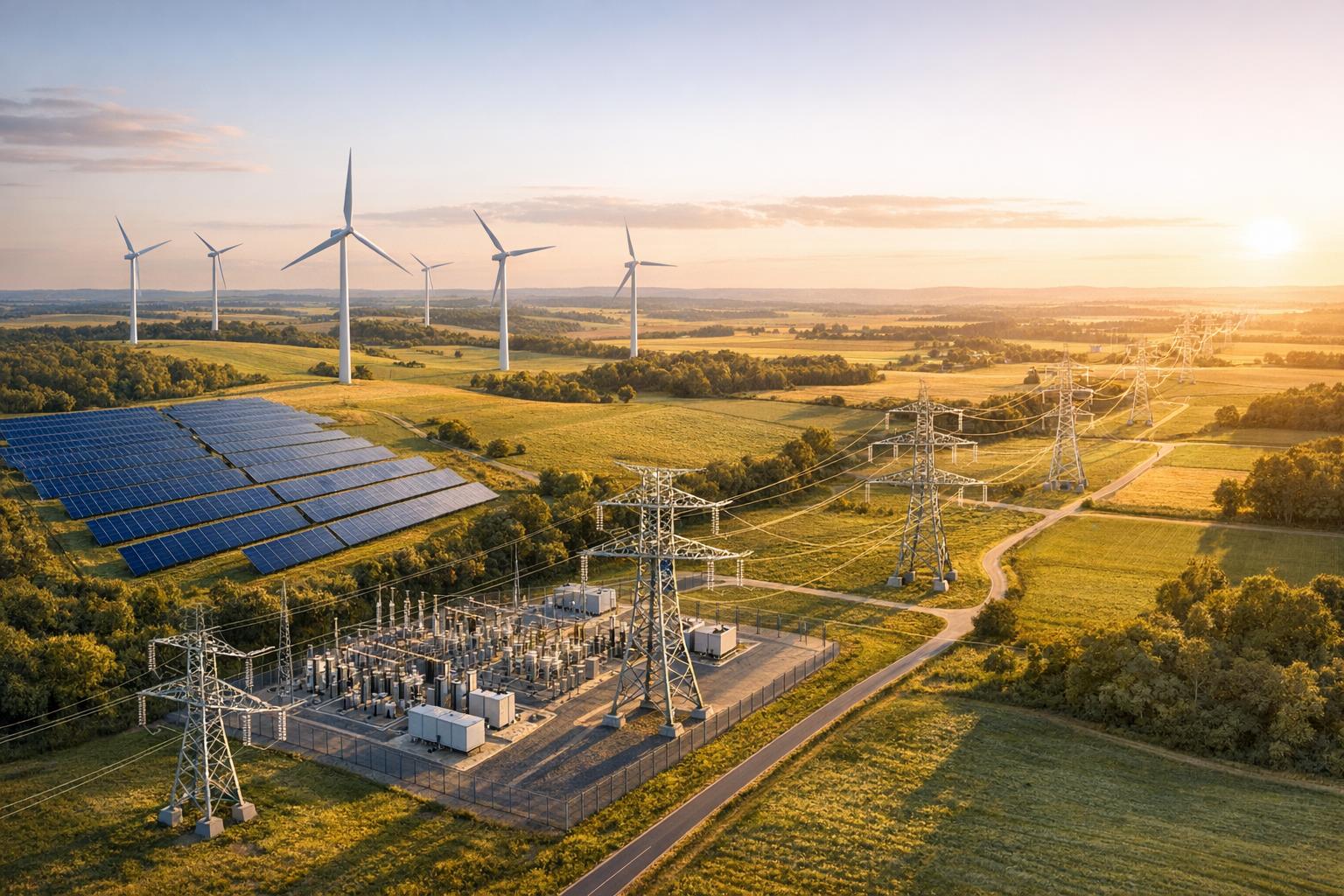
Securing grid connections for large-scale projects in the UAE and UK is a growing challenge. Developers face delays of up to 15 years and rising costs. To address this, eight key grid support technologies can reduce timelines, improve energy management, and support renewable energy goals. These include:
- Battery Energy Storage Systems (BESS): Store excess energy for peak demand, ensuring stable power supply.
- Smart Grid Technologies: Use digital tools for real-time energy management, reducing inefficiencies.
- Dynamic Line Ratings (DLR): Maximise transmission line capacity using real-time data.
- Advanced Power Flow Controls (APFC): Optimise grid operations without new infrastructure.
- Transmission Topology Optimisation (TTO): Reconfigure power flows to increase grid efficiency.
- High-Performance Conductors: Upgrade existing transmission lines to carry more power.
- On-Site Gas Generation: Provide temporary power solutions during grid delays.
- Low Orbit Satellite and Mesh Networks: Ensure reliable communication for remote and off-grid projects.
These technologies offer practical solutions for stabilising grids, integrating renewable energy, and reducing costs. Below, we explore their applications, benefits, and deployment considerations.

Comparison of 8 Grid Support Technologies for Land Developers
Why Is Grid Stability Getting Harder? The Hidden Challenge of Renewable Integration
1. Battery Energy Storage Systems (BESS)
Battery Energy Storage Systems (BESS) are designed to store surplus electricity during periods of low demand and release it when demand peaks. For developers in the UAE and UK, BESS plays a key role in stabilising power grids while supporting the integration of renewable energy sources. This technology addresses the unpredictable nature of solar and wind energy, ensuring a steady supply of electricity even when weather conditions fluctuate. By doing so, it helps tackle grid instability challenges effectively.
Grid Stability Enhancement
BESS contributes to grid stability by providing frequency regulation, voltage control, and peak shaving, which collectively help prevent power outages. In January 2019, the Abu Dhabi Department of Energy, under Chairman Awaidha Al Marar, introduced the world's largest "Virtual Battery Plant." This project utilised 108 MW/648 MWh of NGK Sodium Sulphur (NAS) batteries across 10 locations, including Mussafah and Sila. The system offers six hours of backup power and demonstrated that 1 MW of BESS can eliminate the need for 1.1 MW of combined cycle thermal power, reducing operational and maintenance costs significantly when compared to traditional power plants.
Additionally, BESS helps alleviate grid bottlenecks without requiring expensive infrastructure upgrades. According to the International Energy Agency (IEA), global grid-scale battery storage capacity needs to grow 35 times from 2022 levels, reaching nearly 970 GW by 2030.
Scalability for Large-Scale Projects
Modern BESS installations are designed to scale efficiently, often using lithium iron phosphate (LFP) batteries known for their safety, thermal stability, and durability - offering over 6,000 cycles. Some systems, utilising 314Ah LiFePO₄ batteries, achieve more than 8,000 cycles with over 90% efficiency.
Developers often maximise land use and grid connectivity through co-location strategies. For example, British Solar Renewables has integrated over 120 MW of storage capacity with its 900 MW solar portfolio, enabling frequency response and load shifting to balance the UK's renewable energy supply with its demand. In the UAE, Sodium Sulphur (NAS) batteries are frequently chosen for large-scale projects due to their ability to perform reliably in high temperatures without the need for energy-intensive cooling systems.
Cost-Effectiveness in AED
BESS not only excels in technical performance but also offers financial advantages. It generates revenue through methods like peak shaving, energy arbitrage, and frequency response, with typical payback periods ranging from 3 to 7 years.
"Deploying 1 MW of battery energy storage systems allows avoiding the investment in about 1.1 MW of combined cycle (gas and steam) thermal power plants." – Representative, NGK Insulators Power Business Division
In a study conducted on hybrid energy systems in Khorfakkan, UAE, the levelised cost of energy was calculated at around 1.27 AED/kWh when BESS was integrated. The Middle East's BESS market is expected to grow from USD 3.1 billion (approximately 11.4 billion AED) in 2025 to USD 9.8 billion (approximately 36 billion AED) by 2031, with an annual growth rate of 21.5%. While lithium-ion battery prices have dropped by over 80% in the past decade, developers should remain cautious about recent price volatility caused by fluctuations in the global costs of critical minerals like lithium, cobalt, and nickel.
Ease of Integration with Renewable Energy
BESS also aligns seamlessly with renewable energy systems like solar and wind farms. Advanced Battery Management Systems (BMS) and AI-driven software enable real-time monitoring and optimisation of the state of charge, ensuring a smooth balance between intermittent renewable energy supply and grid demand.
In August 2025, Tesla completed a 200 MWh grid-scale battery project in the Middle East. This system provides frequency regulation and peak load support to local utilities, further strengthening regional grid reliability. For solar-plus-storage projects, DC-coupling offers higher efficiency by reducing the number of power conversions required. Additionally, the technology allows for "value stacking", where assets can participate in multiple markets - such as energy arbitrage, frequency response, and capacity auctions - maximising returns on investment.
2. Smart Grid Technologies
Smart grid technologies are a powerful complement to battery storage solutions, offering a more refined way to manage energy grids. These systems rely on digital sensors and automated decision-making to balance electricity supply and demand in real time. For developers in the UAE and UK, they provide the control and visibility necessary to manage large-scale renewable energy projects effectively. By implementing Distributed Energy Resource Management Systems (DERMS), developers can better oversee distributed solar, EV charging, and storage systems, addressing challenges like voltage regulation and network congestion. This digital framework sets the stage for further advancements outlined below.
Grid Stability Enhancement
One of the standout benefits of smart grids is their ability to enhance grid stability. By using digital sensors and real-time automation, these systems optimise the performance of existing networks, serving as a cost-effective "digital alternative" to expensive grid expansions. Interestingly, around 75% of all investment in digital grid infrastructure is directed towards the distribution sector, focusing on smart meters and automation.
"Smart-grid technologies are already deployed cost-effectively in many instances today, enabling higher penetration of renewable energy sources." – IRENA
Scalability for Large-Scale Projects
In 2021, Dubai Electricity and Water Authority (DEWA) updated its Smart Grid Strategy 2035, shifting its focus from technology-driven initiatives to value-oriented goals. With an investment of AED 7 billion, the programme spans six key areas, including Grid Automation and Smart Energy Solutions. Having achieved its short-term objectives, DEWA is now working on 19 specific smart grid capabilities to align with Dubai's Net Zero Emissions Strategy 2050. This phased approach demonstrates how scalable strategies can strengthen grid infrastructure and improve resilience.
Cost-Effectiveness in AED
Smart grid technologies also shine in their ability to reduce costs. By using DERMS, developers can leverage flexibility as an alternative to costly physical network upgrades. The sector's focus on digital solutions is evident in the 7% growth in investment in grid-related digital infrastructure in 2022.
"DEWA's Smart Grid Programme, with investments totaling AED 7 billion, supports the directives... to make Dubai the smartest and happiest city in the world." – Dubai Electricity and Water Authority (DEWA)
Seamless Integration with Renewable Energy
Smart grids play a crucial role in integrating renewable energy sources like solar and wind. They provide the necessary visibility to address grid bottlenecks while cutting down the costs tied to managing variable energy inputs. Virtual Power Plants (VPPs), which aggregate distributed energy resources through digital platforms, allow developers to tap into multiple revenue streams simultaneously. Additionally, early adoption of smart metering enhances demand response and minimises commercial losses.
3. Dynamic Line Ratings (DLR)
Dynamic Line Ratings (DLR) take smart grid technology a step further, offering real-time insights to optimise the capacity of transmission lines. Instead of relying on conservative "worst-case" weather assumptions, DLR uses sensors to measure real-time conditions such as wind speed, ambient temperature, and solar radiation. These measurements help determine the actual current-carrying capacity of a line at any given moment. This approach allows transmission infrastructure to operate closer to its physical limits, unlocking unused capacity that would otherwise go unnoticed.
Grid Stability Enhancement
For large-scale land development projects, DLR provides a dual benefit: it maximises transmission capacity while ensuring safety. Slovenia's transmission operator, ELES, implemented a DLR system across 29 lines between 2013 and 2017. The results were impressive: the system prevented over 20 "N" overloading events and more than 500 "N-1" events annually, while increasing transmission capacity 92–96% of the time. Similar success stories come from Belgium and France, where capacity reached up to 200% of rated levels under certain conditions, with intraday increases of up to 130%. These operational improvements not only enhance reliability but also bring substantial cost savings.
Cost-Effectiveness in AED
The financial appeal of DLR is clear. DEWA has earmarked AED 10 billion for electricity transmission projects between 2021 and 2024. Implementing DLR can stretch this investment further, reducing the need for costly infrastructure upgrades. For example, a 2017 pilot project in Spain installed seven DLR sensors on a 220 kV line to measure minute catenary angle changes of just 0.005º. In just three months, this minor investment led to a 15–30% increase in capacity. In Abu Dhabi, TRANSCO employs condition-monitoring systems across its high-voltage network, using real-time data on temperature and load to shift from reactive to predictive maintenance. This approach reduces emergency repair costs while maintaining grid stability.
Ease of Integration with Renewable Energy
DLR also complements renewable energy by taking advantage of natural synergies between power generation and transmission. High wind speeds that boost turbine output also cool transmission lines, increasing their thermal capacity exactly when energy production peaks. This capability prevents the curtailment of renewable energy by revealing additional capacity in existing transmission infrastructure. Unlike traditional line construction, which often involves lengthy permitting processes, DLR offers a faster, non-wire alternative.
"By increasing the ampacity of existing lines under favourable conditions, DLR can reduce the need for building new transmission lines, thereby saving costs on infrastructure development and minimising environmental impact." – ENTSO-E
4. Advanced Power Flow Controls (APFC)
Advanced Power Flow Controls (APFC), such as Flexible Alternating-Current Transmission Systems (FACTS), provide the tools to manage and optimise power flows in real time across the grid. Unlike traditional infrastructure, which operates with significant safety buffers, APFC allows the grid to operate closer to its full capacity without sacrificing reliability. This ability is crucial for incorporating large-scale energy projects into existing systems. Building on earlier grid support technologies, APFC introduces dynamic, real-time adjustments to improve overall grid functionality.
Grid Stability Enhancement
APFC plays a key role in enhancing grid stability by offering precise control that helps contain faults and prevents cascading failures. This is particularly important for the UAE, where urbanisation and renewable energy projects are rapidly expanding. A practical example comes from January 2026, when the National Laboratory of the Rockies and Holy Cross Energy showcased autonomous grid control at the Basalt Vista development in Colorado. Using decentralised algorithms, they coordinated household loads and locally generated energy during extreme events. In another instance, NLR used Heila Technologies' controllers to manage a 785-kW microgrid, integrating 20 assets like solar panels, fuel cells, and a natural gas/hydrogen microturbine into a resilient virtual power plant.
Cost-Effectiveness in AED
In addition to improving resilience, APFC offers notable cost savings. By maximising the use of existing grid assets, it reduces the need for expensive infrastructure expansions or new transmission lines. Advanced grid management can lower inertia management costs by 40%, cut maintenance expenses by 20–25%, and automate reconfiguration to reduce operational costs by up to 20%. Furthermore, these technologies enable "hyperlocal" clean energy systems, allowing developers to incorporate distributed energy resources without requiring costly utility-side upgrades.
Seamless Integration with Renewable Energy
APFC facilitates the integration of renewable energy by redirecting power from congested lines to underutilised ones, effectively managing the variability of solar and wind energy. These systems are quicker and more cost-effective to deploy compared to building new transmission lines. The European Commission projects an investment of approximately EUR 170 billion (USD 184 billion) in grid digitalisation by 2030, including automated management and smart metering. APFC supports renewable energy penetration of up to 70% while maintaining grid stability, a significant leap from traditional, centralised systems.
"With unprecedented levels of renewable power being added globally, we must reconsider how we design, plan and operate power systems to support the rapid pace of the energy transition." – Niklas Persson, Managing Director of Hitachi Energy's Business Unit Grid Integration
5. Transmission Topology Optimization
Transmission Topology Optimization (TTO) uses advanced digital tools to improve grid performance without the need for costly new infrastructure. Instead of constructing additional substations or transmission lines, TTO reconfigures power flows in real time, maximising the capacity of existing systems. This approach is particularly beneficial in the UAE, where over 3,000 GW of renewable energy projects are queued for grid connections. By optimising the current infrastructure, TTO serves as a "safety valve", a term coined by the International Energy Agency (IEA), to ease the burden of building expensive physical assets. Beyond efficiency, this digital strategy enhances fault management and operational control.
Grid Stability Enhancement
TTO significantly improves grid stability by enabling automated fault isolation and rapid recovery. A prime example is DEWA’s Automatic Smart Grid Restoration System (ASGR), launched in June 2022 as part of its AED 7.01 billion Smart Grid Programme under the Clean Energy Strategy 2050. This system uses IoT-enabled sensors to detect faults, isolate affected areas, and restore power within seconds. Such capabilities are vital in urban areas with dense populations, ensuring uninterrupted service. Globally, grid outages cost around USD 100 billion annually, equating to 0.1% of global GDP. TTO’s fault management features help mitigate these financial losses while maintaining reliability.
Scalability for Large-Scale Projects
TTO also plays a critical role in advancing large-scale renewable energy projects by optimising existing grid capacity. It enables efficient management of two-way energy flows and accommodates the fluctuating output from solar and wind installations. This ensures that grids can handle higher levels of renewable energy without compromising stability. For instance, in September 2022, TAQA and TRANSCO completed a AED 13.95 billion project connecting ADNOC’s offshore operations using HVDC subsea lines, cutting its carbon emissions by 30%. Such projects highlight TTO’s ability to scale and support ambitious renewable energy goals.
Cost-Effectiveness in AED
The financial advantages of TTO are hard to overlook. Avoiding the construction of new substations or transmission lines - which can cost tens of millions of AED - allows developers to allocate funds to other priorities. The UAE’s smart grid market, which includes TTO technologies, is expected to grow from AED 5.40 billion in 2022 to AED 9.84 billion by 2030. By replacing expensive infrastructure upgrades with software and sensor installations, TTO reduces costs while improving grid efficiency. It also minimises electricity losses along transmission lines, aligning with UAE federal laws aimed at boosting grid performance.
"Real-time knowledge of system health through the use of smart grid technologies allows for fuller utilisation of existing resources, enables networks to operate closer to their true limits without sacrificing reliability." – IEA
Ease of Integration with Renewable Energy
TTO not only enhances grid stability and cuts costs but also simplifies the integration of renewable energy. Its multi-layer sensing and automated switching capabilities are essential for managing the variable output of solar and wind power. Technologies like smart meters, feeder sensors, and transformer monitors provide live data to manage two-way energy flows efficiently. With edge intelligence, local controllers can make split-second decisions to maintain stability, reducing reliance on centralised commands. Developers must also adhere to UAE federal laws for connecting distributed renewable energy units, which aim to lower peak electricity demand and reduce transmission losses. To meet global climate goals, investments in grid infrastructure need to exceed USD 600 billion annually by 2030.
sbb-itb-0a9f22b
6. High Performance Conductors
High-performance conductors, especially High-Temperature Low-Sag (HTLS) technologies, are a game-changer for transmission lines. They allow lines to carry more power without sagging, making it possible to increase the capacity of existing overhead lines without the need for new towers or additional land. For developers in the UAE, this means quicker project timelines and lower infrastructure costs compared to building entirely new transmission corridors.
Grid Stability Enhancement
Traditional conductors often falter under high temperatures, leading to sagging and even service disruptions. High-performance conductors, however, are built to withstand elevated temperatures while maintaining their structural integrity - an essential feature in the UAE's hot climate. By reducing transmission congestion, which is a major cause of renewable energy curtailment, these conductors ensure that solar and wind energy efficiently reaches its destination instead of going to waste. This capability further boosts the effectiveness of existing infrastructure, complementing other technologies discussed earlier.
Scalability for Large-Scale Projects
Beyond improving grid stability, high-performance conductors make it easier to expand capacity quickly without investing in new infrastructure. With wind and solar expected to dominate 80% to 90% of the global increase in power capacity over the next two decades, these conductors provide a practical solution. They enable the uprating of existing infrastructure, sidestepping the lengthy 5- to 15-year permitting process required for new transmission lines. This is particularly advantageous when renewable energy projects themselves typically take just 1 to 5 years to complete.
Cost-Effectiveness in AED
The financial benefits of high-performance conductors are hard to ignore. Compared to the high costs of constructing new transmission corridors, retrofitting existing lines with these advanced technologies is far more economical. This approach could save developers tens of millions of AED in capital expenses while improving grid efficiency. When paired with other tools like Dynamic Line Ratings, high-performance conductors help resolve multiple capacity issues at once. These cost savings directly contribute to faster land development and smoother integration of renewable energy into the grid.
7. On-Site Gas Generation
On-site gas generation offers a practical solution for projects facing lengthy grid delays of 5–7 years. These systems can be up and running in just 18–24 months, providing essential "bridge power." This bridge power enables developments to begin generating revenue immediately while also contributing to greater grid stability.
Grid Stability Enhancement
Natural gas generation delivers dependable, all-weather power, making it especially crucial for critical infrastructure like data centres, which demand 99.999% uptime - equivalent to less than five minutes of downtime per year. Unlike solar and wind, which depend on weather conditions, gas-fired systems provide a continuous baseload of power. When paired with battery storage, their reliability increases further. For instance, the Center Peaker plant in Norwalk, California, combines a natural gas facility with a 10 MW / 4.3 MWh battery. This setup allows the plant to provide spinning reserves and frequency response services instantly, with the battery covering the initial minutes of start-up until the gas plant reaches full capacity. This kind of hybrid approach strengthens grid stability and ensures uninterrupted power supply.
Ease of Integration with Renewable Energy
Gas generation works seamlessly with renewable energy sources through microgrid systems. A great example is Heila Technologies’ 785-kW microgrid, implemented in 2026 on a 6.5-hectare farm. This innovative setup integrates 20 assets, including solar panels, fuel cells, batteries, and a natural gas–hydrogen microturbine. The National Laboratory of the Rockies validated that these assets could operate as a cohesive virtual power plant. This kind of integration ensures a continuous power supply by filling in gaps when solar or wind output drops, while still maximising the use of renewable energy. It complements broader strategies for grid support, as discussed earlier.
Cost-Effectiveness in AED
Combined Heat and Power (CHP) systems are highly efficient, achieving rates of up to 80%, compared to the roughly 40% efficiency of traditional grid power. For UAE developers, this translates into substantial operational savings. For example, in June 2025, TAQA and EWEC signed agreements for integrated gas and renewable infrastructure, with potential investments of approximately AED 52 billion. Beyond initial costs, AI-driven predictive maintenance for gas assets can reduce operations and maintenance expenses by 20–25%. These financial advantages highlight the practicality of multi-technology approaches for fast and economical grid support.
Thomas McAndrew, Founder and CEO of Enchanted Rock, summarises the benefits perfectly:
"Microgrids can quickly and cost effectively provide the bridge power that data centres need to come online and then [can] repurpose the microgrid as backup and for peak support."
8. Low Orbit Satellite and Mesh Networks
Low Earth Orbit (LEO) satellites and mesh networks are transforming how remote grids stay connected, especially in areas where laying fibre-optic cables is prohibitively expensive. Unlike GEO satellites, which orbit at about 35,000 km above Earth, LEO satellites operate much closer - around 480 km. This proximity slashes latency from approximately 600 ms to just 40 ms. Such low latency is crucial for maintaining grid stability, as it allows utilities to quickly identify faults, isolate problems, and restore services automatically. By enabling rapid data transmission, these networks enhance the effectiveness of grid-supporting technologies.
Boosting Grid Stability
Fast communication is the backbone of real-time grid management. For instance, DEWA's Advanced Smart Grid Resilience (ASGR) system uses low-latency IoT sensors to detect and isolate faults, achieving minimal downtime. Dubai set a global benchmark in 2023 with an average downtime of just 1.06 minutes per customer, far outperforming the EU average of around 15 minutes. The reduced latency provided by LEO satellites plays a key role in enabling such swift fault responses, especially in remote areas where traditional communication infrastructure is unavailable.
Khaled Shadi Morshed, an Electrical Engineer at Commissioning Services International, aptly summarises the importance of these advancements:
"Smart grids rely on advanced technologies, including automated metering, energy storage, and digital communication, to create a more efficient, responsive, and sustainable power system."
Scaling for Large Projects
Beyond improving grid stability, these networks excel at managing the complexities of large-scale projects. The UAE's smart grid market is expected to grow to USD 2.68 billion (approximately AED 9.84 billion) by 2030, with a compound annual growth rate (CAGR) of 7.82%. DEWA has already invested USD 1.91 billion (around AED 7 billion) in its Smart Grid Programme, which oversees 2.1 million smart electricity and water meters across Dubai. This highlights the ability of satellite and mesh networks to handle the immense data requirements of utility-scale operations.
These networks support various architectures, including Neighborhood Area Networks (NAN) for localised clusters, Wide Area Networks (WAN) for broader transmission and distribution, and LoRaWAN for low-power, long-range IoT connectivity. For developers working on expansive renewable energy projects, such as solar or wind farms, these networks make it possible to monitor systems in real time using mobile apps and dashboards - even in off-grid areas. The UAE's IoT utilities market, valued at USD 922.1 million (approximately AED 3.39 billion) in 2024, is projected to grow to USD 1.8 billion (around AED 6.61 billion) by 2030.
Affordable Solutions in AED
The cost of LEO satellite hardware has become increasingly competitive. For instance, Starlink equipment costs about £449 (around AED 2,065) upfront for the dish and router, with monthly subscriptions starting at approximately £75 (around AED 345) for residential plans and £39 (roughly AED 180) for 50GB of priority business data. For land developers, pairing satellite terminals with solar battery storage offers a cost-effective alternative to the high expenses of trenching and installing underground cables in challenging terrains.
Seamless Integration with Renewable Energy
LEO satellites and mesh networks also enhance connectivity for Virtual Power Plants (VPPs), enabling reliable, real-time monitoring and control of remote renewable energy installations. The 3GPP (Release 17) is working to standardise Non-Terrestrial Networks (NTN) by integrating satellite access with 5G New Radio (NR), ensuring global coverage. Additionally, standards like IEEE 2030.7/2030.8 for microgrid controllers reduce integration costs, making it easier to deploy satellite terminals in remote solar or wind farms. This integration ensures uninterrupted monitoring and control, eliminating the need for expensive terrestrial infrastructure. Together, these advancements strengthen renewable energy management and reinforce the overall grid infrastructure.
Technology Comparison Table
The table below provides a side-by-side comparison of six key technologies that are particularly relevant for land developers in the Middle East and the UK. It highlights essential metrics to help identify which solution best matches specific project requirements.
| Technology | Estimated Cost (AED) | Deployment Timeline | Scalability | Best Suited For |
|---|---|---|---|---|
| Battery Energy Storage Systems (BESS) | Varies by capacity; costs influenced by mineral prices (e.g., lithium prices rose by 7% in 2022) | 1–2 years | Very High | Renewable energy integration (solar/wind), peak shaving, remote locations |
| Smart Grid Technologies | AED 7.01 billion for utility-wide programmes (e.g., DEWA 2014–2035) | Medium (phased rollout) | High | Urban areas, improving energy efficiency, reducing energy losses |
| Advanced Power Flow Controls (APFC) | Incorporated within HVDC systems; large offshore projects valued at AED 13.95 billion | 2–4 years | Medium to High | Complex grid networks, long-distance power transmission |
| Transmission Topology Optimisation | Software-based solution integrated with utility management systems | Rapid (software-driven) | High | Increasing reliability and reducing technical losses |
| High Performance Conductors | Moderate cost, depending on corridor length | 2–4 years | Medium | Modernising old infrastructure without adding new corridors |
| Low Orbit Satellite & Mesh Networks | Costs vary based on equipment and subscription plans | Rapid (hardware and subscription-based) | High | Reliable connectivity in remote or hard-to-reach areas |
These technologies cater to different needs. For instance, BESS offers immediate support for renewable energy integration without requiring extensive infrastructure upgrades. Smart grid technologies are ideal for phased rollouts aimed at improving energy efficiency over time. Advanced power flow controls are better suited for large-scale, capital-intensive projects. On the other hand, transmission topology optimisation focuses on enhancing grid reliability by reducing technical losses through software solutions. High performance conductors efficiently upgrade ageing infrastructure, while low orbit satellite and mesh networks ensure reliable connectivity in remote and challenging locations.
Ultimately, the right choice depends on your project’s priorities - whether it's rapid deployment, long-term efficiency, or ensuring connectivity in remote areas. Carefully selecting the right technology can significantly improve grid stability and optimise project outcomes.
Conclusion
The eight grid support technologies discussed offer developers in the UAE and UK practical tools to stabilise grids, improve energy efficiency, and advance sustainable energy initiatives. Smart grid systems play a key role in balancing electricity supply and demand in real-time, ensuring reliability while keeping costs in check. Meanwhile, battery energy storage systems help address the variability of renewable energy sources, reducing energy waste and supporting decarbonisation objectives.
To maximise these benefits, developers should focus on implementing flexible, cost-effective solutions. For instance, distributed stand-alone storage systems and demand response programmes can tackle local network issues like voltage fluctuations and congestion without requiring expensive network upgrades. These approaches are particularly valuable in addressing grid connection delays and accommodating the UAE's specific energy needs. In the UK, achieving decarbonisation goals from 2030 to 2050 will require long-duration electricity storage to manage periods of low renewable energy generation.
Early stakeholder engagement is crucial. Grid infrastructure projects often take 5–15 years to plan and secure permits, far exceeding the 1–5 years typically needed for renewable energy developments. Collaborating with local communities and authorities early in the process can streamline permitting and build public support. Additionally, when choosing vendors for smart grid devices, developers should prioritise those with strong cybersecurity measures to mitigate risks associated with digital infrastructure.
FAQs
How do Battery Energy Storage Systems (BESS) improve grid stability in the UAE and the UK?
Battery Energy Storage Systems (BESS) play a key role in keeping power grids stable by balancing energy supply and demand. These systems store extra energy produced during times of low demand - like midday when solar energy peaks - and release it during high-demand periods. This ensures a steady and reliable energy flow, which is crucial for managing the unpredictable nature of renewable energy sources such as solar and wind. Both the UAE and the UK rely heavily on these renewable sources, making BESS an essential part of their energy strategies.
Beyond storage, BESS offers rapid-response services such as frequency regulation and voltage support, which are vital for maintaining grid stability in real time. In the UAE, these systems enable the smooth integration of renewable energy into the grid, helping to offset fluctuations caused by weather changes. Similarly, in the UK, BESS plays a critical role in supporting the increasing use of renewables and the shift towards electrification, ensuring the grid remains both stable and reliable. By implementing BESS, both regions can maximise energy efficiency and advance their sustainable infrastructure goals.
How do smart grid technologies support the integration of renewable energy in modern developments?
Smart grid technologies are critical for managing the integration of renewable energy sources. By leveraging real-time monitoring and advanced digital tools, these systems optimise electricity supply and demand, making it easier to handle the unpredictable nature of solar and wind energy. This not only enhances energy reliability but also reduces the need for expensive infrastructure expansion.
In the UAE, smart grids are instrumental in maintaining grid stability while supporting environmentally friendly infrastructure. These systems seamlessly integrate distributed energy resources and electric vehicles, cutting down on environmental impact and boosting energy efficiency. They also tackle issues like transmission congestion and energy curtailment, smoothing the transition to cleaner energy alternatives.
For land developers, incorporating smart grid technologies is essential for building sustainable, forward-thinking projects that align with the UAE's energy and environmental objectives.
What is Dynamic Line Rating (DLR) and how does it improve transmission line performance?
Dynamic Line Rating (DLR) boosts the efficiency of transmission lines by adjusting their capacity in real-time, based on environmental factors like temperature, wind speed, and solar radiation. By leveraging these conditions, operators can safely increase a line’s capacity - sometimes by as much as 200% - without investing in expensive new infrastructure.
This smarter use of existing transmission lines helps reduce grid congestion, enhance overall efficiency, and ease the integration of renewable energy. It's a practical and economical option for modern energy systems, especially in places like the UAE, where high temperatures and a growing focus on renewable energy play a major role.