Choosing the right site for energy projects like solar farms, wind turbines, or data centres is more than just finding available land. It requires balancing technical needs, cost, and regulations. Developers in the UK and GCC face unique challenges:
- UK: Limited grid capacity, high land costs (up to £10M/hectare in the South), and strict net-zero rules.
- GCC: Extreme heat, water scarcity, and a $60B funding gap for renewable energy projects.
Key factors include:
- Land suitability: Proximity to grid points, cost, and resource availability (e.g., sunlight or wind).
- Grid connectivity: Infrastructure gaps and delays, with UK grid delays averaging 3.7 years.
- Regulations: UK has strict environmental rules, while GCC offers faster approvals but faces cooling and cybersecurity issues.
Solutions involve thorough site assessments (e.g., drone surveys, shading analysis), early regulatory engagement, and planning for climate resilience. Success depends on addressing these challenges early to avoid delays and extra costs.
Quick Tip: In the UK, repurposing brownfield sites can cut costs, while in the GCC, desert locations near transmission lines reduce connection expenses.
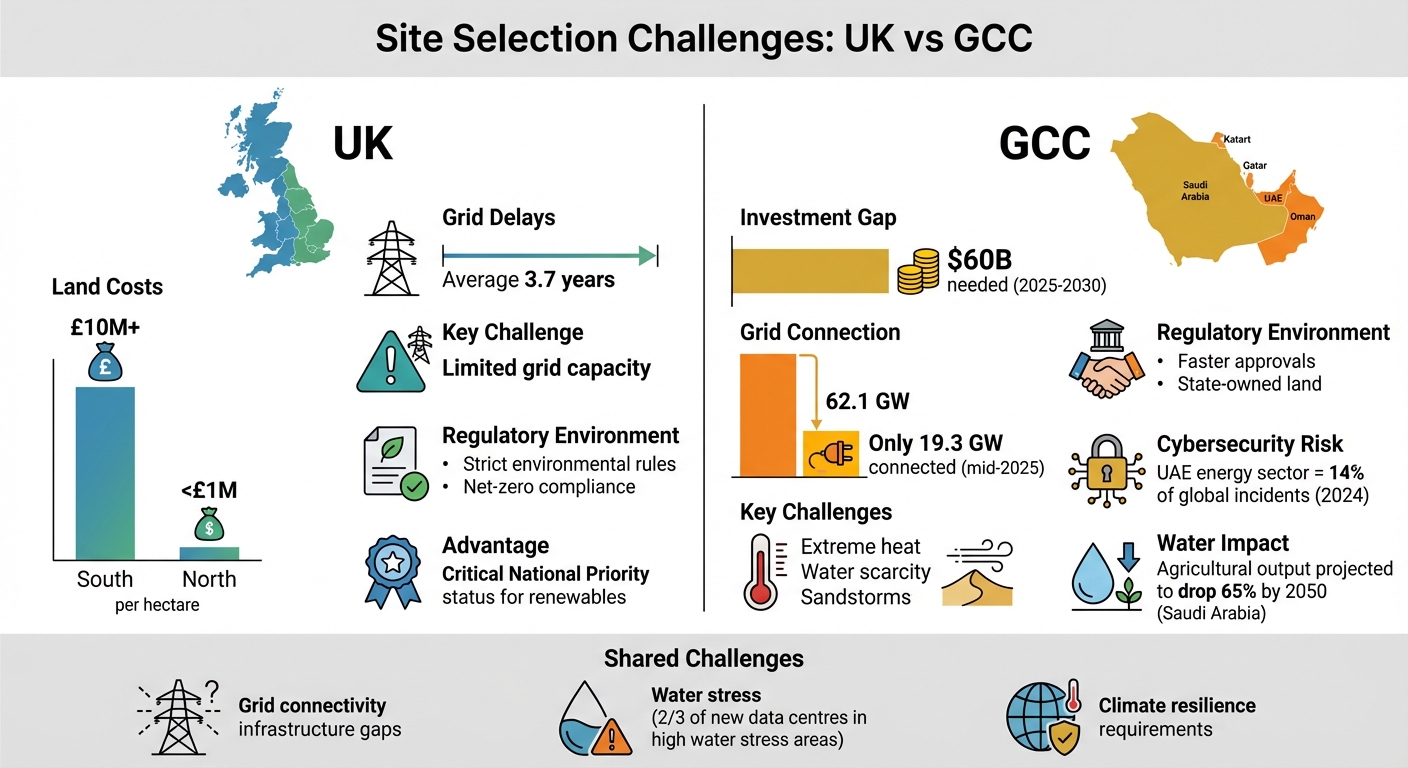
UK vs GCC Energy Site Selection: Key Challenges and Statistics
Main Challenges in Site Selection for Energy Developers
Land Availability and Suitability
Finding the right land for energy projects is no simple task. In the UK, developers face a tricky balancing act between proximity to Grid Supply Points and soaring land prices. For instance, prime locations in London and the South East can cost over £10 million per hectare, while land in Northern England, Scotland, and Wales is available for less than £1 million per hectare. This massive price gap forces developers to weigh the savings on land against the extra costs of building infrastructure in less central areas.
In the Middle East, the challenges take on a different form. Political instability often limits access to viable sites, with permit rejections in the West Bank and unrest in countries like Iraq and Lebanon further restricting options. Additionally, the region grapples with the "food-water-energy nexus", where land is fiercely contested between agriculture, water-intensive desalination, and renewable energy projects. Saudi Arabia is a prime example, with its agricultural output projected to drop by 65% by 2050 due to water scarcity. This has led to a growing preference for renewable-powered desalination projects. These regional dynamics heavily influence land acquisition strategies and project feasibility.
"Economic security, not reduction of emissions, is at the core of this expansion of states' energy supplies." - Ellen Clarke, Research Analyst, IISS
Geographic and technical factors further complicate matters. Solar projects in the UK need adequate sunlight, while wind farms require consistent wind speeds. Developers also have to address issues like glint and glare from solar panels, which can affect nearby airports and homes. This often calls for advanced geometric modelling to meet regulatory requirements. Beyond securing land, ensuring reliable grid connectivity is crucial for a project's success.
Grid Connectivity and Infrastructure Gaps
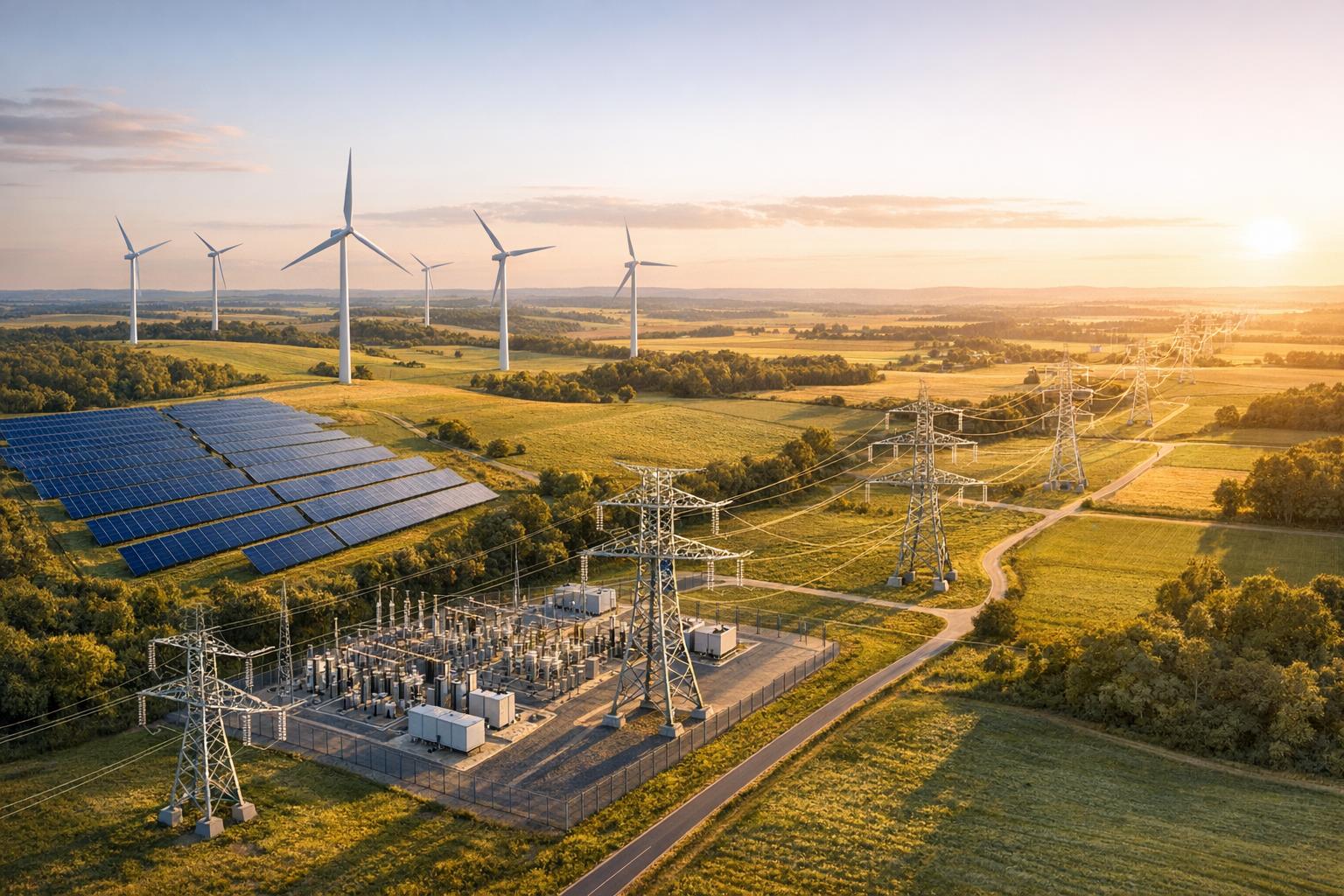
Access to the grid can make or break an energy project. In the UK, grid capacity in regions like London and the South East is stretched thin, pushing developers to consider Scotland and Wales. However, these areas often require significant investment in substations and fibre networks, adding to overall costs. The challenge is just as pressing in the GCC, where only 19.3 GW of the 62.1 GW of renewable capacity investments had been connected to the grid by mid-2025. Jordan, for instance, has even imposed moratoriums on new projects due to grid limitations.
"Power availability is one of the most critical factors in data centre site selection." - Mark Allison, Technical Director, ADAS
Infrastructure bottlenecks often lead to delays and increased expenses. Developers working in less urbanised areas face the added burden of building new infrastructure, while power reservation agreements with Distribution Network Operators come with no guarantees on timelines. On average, these delays can stretch to 3.7 years . In the GCC, achieving regional energy goals will require an estimated $60 billion in investment between 2025 and 2030 to add the remaining 102 GW of grid capacity. Beyond infrastructure, navigating regulatory complexities further adds to the challenges.
Environmental and Regulatory Compliance
Regulations vary widely across regions, creating another layer of complexity for developers. In the UK, detailed Environmental Impact Assessments and compliance with Biodiversity Net Gain regulations are mandatory. Meanwhile, the GCC offers quicker approvals with fewer planning restrictions, largely due to the prevalence of state-owned land . However, the GCC comes with its own hurdles, including extreme heat, sandstorms, remote locations, and water scarcity, all of which drive up cooling costs . Cybersecurity is another growing concern, with the UAE's energy sector accounting for 14% of all reported cybersecurity incidents in 2024, making it the third most targeted globally.
Water management is a shared challenge for both regions. Around two-thirds of new data centres built or under development globally since 2022 are located in areas experiencing high water stress. In the GCC, desalination plays a critical role, while UK developers face mounting pressure to manage water resources responsibly and prevent contamination of local supplies .
Big Topics: Data Center Site Selection with CBRE

Solutions for Overcoming Site Selection Challenges
Tackling site selection issues requires careful evaluation and strategic planning, especially when dealing with renewable energy projects.
Land Assessment Techniques
A well-structured site evaluation process - covering identification, assessment, drafting, and documentation - can save months of delays.
When it comes to solar projects, assessments need to go beyond basic surveys. Developers should use shading analysis tools to identify potential obstructions that could impact energy output throughout the year. Equally important are structural evaluations, which ensure that roofs and mounting systems can handle the weight of solar panels. For larger or hard-to-reach areas, drone surveys provide detailed aerial imagery and precise measurements, making the process more efficient.
"A commercial solar PV system represents a significant investment, and its performance depends entirely on how well the design matches your property's unique characteristics." - ProStar Energy
Proximity to the grid is another critical factor. Choosing land near a Grid Supply Point reduces connection costs and minimises environmental disruption. For sites close to sensitive areas, GIS-based glint and glare assessments can help mitigate potential impacts on airports or residential zones.
Once the land is assessed, the next step is ensuring affordable and efficient grid connectivity.
Improving Grid Connectivity
Addressing grid connection challenges demands both strategic thinking and innovation. Developers should focus on sites close to the National Electricity Transmission System to reduce connection costs and simplify the process. For offshore projects, using bootstraps - offshore extensions of the onshore grid - can streamline connections between generation sites and the main grid.
Early engagement with regulators is crucial. For example, working with marine licensing bodies like the MMO in England or NRW in Wales during the pre-application stage can help align Development Consent Order applications with marine licence requirements, avoiding unnecessary delays.
Infrastructure planning must also account for climate resilience. Coastal installations, for instance, need assets like cabling and substations designed to withstand storms, flooding, and rising sea levels. High-voltage infrastructure (above 132kV) should undergo electro-magnetic field assessments to ensure it doesn’t pose risks to people or the environment. In areas with limited road networks, using multi-modal transport for heavy equipment can cut costs and reduce environmental impact.
At the same time, compliance with environmental regulations remains a priority.
Managing Environmental and Regulatory Processes
Renewable energy projects in the UK benefit from the Critical National Priority (CNP) designation, which recognises the importance of renewable electricity generation. This status often allows such projects to proceed even when they might affect nationally designated sites like SSSIs or National Parks.
"Electricity generation from renewable sources is an essential element of the transition to Clean Power 2030 Mission, net zero and meeting our statutory targets for the sixth carbon budget (CB6)." - Department for Energy Security and Net Zero
An evidence-led approach to Environmental Impact Assessment (EIA) scoping can help developers save both time and money. By "scoping out" environmental factors that are unlikely to have significant effects, developers can focus their Environmental Statements on the most relevant impacts. For projects with incomplete designs, the Rochdale Envelope approach evaluates worst-case scenarios for environmental, social, and economic effects, ensuring compliance regardless of the final specifications.
Maintaining a Commitments Register throughout the application process demonstrates that mitigation measures are in place. Engaging with Statutory Nature Conservation Bodies and regulators early in the pre-application phase can identify potential issues before they escalate. For offshore projects, coordinating Development Consent Orders with marine licences from the start helps avoid regulatory conflicts and delays.
sbb-itb-0a9f22b
Case Studies: Site Selection in the Middle East and UK
Real-world examples show how smart site selection can tackle regional challenges effectively.
Utility-Scale Solar Projects in the Middle East
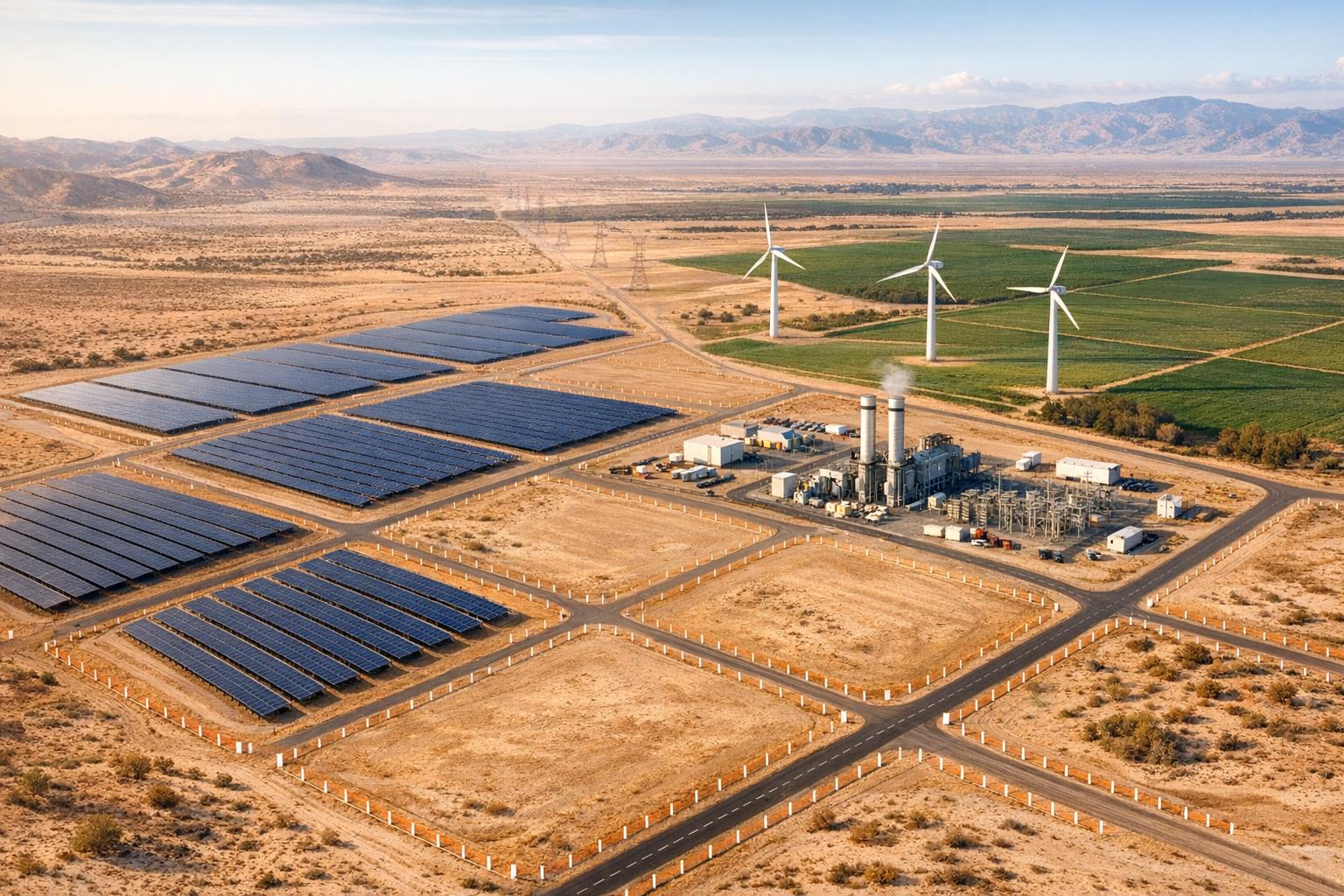
The Al Dhafra Solar PV project in Abu Dhabi is a standout example of how careful site selection can lead to groundbreaking achievements. This 2GW facility, commissioned in June 2023, set a global record with a levelised cost of electricity of just 1.35 cents/kWh (AED 4.97 fils/kWh). Located 35km south of Abu Dhabi on a 20km² desert site, the location was chosen to minimise connection costs thanks to its proximity to transmission lines and to take advantage of flat desert terrain for large-scale solar deployment [25,26].
The project brought together a consortium of TAQA (40%), Masdar (20%), EDF Renewables (20%), and Jinko Power (20%), which secured a 30-year Power Purchase Agreement with the Emirates Water and Electricity Company. Financing involved seven international banks, with risks distributed across the consortium. The facility uses 4 million bifacial solar modules that capture sunlight from both sides, leveraging the desert's reflective surface (high albedo) to enhance energy output. Today, it powers around 200,000 homes while cutting carbon emissions by over 2.4 million tonnes annually [25,26].
Adapting to desert conditions requires creative solutions. At the Bab Al Shams Solar PV Plant in Dubai, developers addressed dust accumulation with automatic cleaning robots, which conserve water resources. Similarly, Noor Abu Dhabi in Sweihan employs robotic systems that clean 800km of solar panels daily without water. Jorge Perea, Executive Managing Director of Noor Abu Dhabi, utilised drones to map out 616,098 ground screw locations with near-perfect precision, enabling the installation of 26,000 panels in just 24 hours. This approach ensured the project was completed on time and within its US$872 million budget, thanks to a focus on streamlined design.
"Engineering is to do the necessary with the minimum cost. It is not architecture... I don't need a gold pen to write." – Jorge Perea, Executive Managing Director, Noor Abu Dhabi
These examples showcase how solar projects in the Middle East are overcoming extreme environmental challenges with innovative and efficient methods.
Wind and Battery Storage Projects in the UK
While the Middle East capitalises on vast desert landscapes, the UK takes a different approach, repurposing brownfield sites to navigate regulatory and grid constraints. High land costs and grid limitations are tackled by using previously industrialised locations.
The Welkin Road Battery Energy Storage System in Stockport is a prime example. Developed by Masdar Arlington Energy and set to be operational by 2025, this 20MW/40MWh facility is located on a brownfield site. This choice not only supports local regeneration but also avoids conflicts over high-value agricultural land. The project will power 10,000 homes daily and benefits from the UK's Critical National Priority designation for renewable energy infrastructure. This status allows projects to move forward as long as thorough environmental mitigation measures are in place. Early collaboration with statutory bodies during the pre-application phase was key to addressing potential challenges.
For integrating renewable energy with digital infrastructure, the Khazna Data Centre PV Plant in Abu Dhabi offers a compelling example. This 7MWp solar installation was specifically designed to supply clean energy to the Khazna Abu Dhabi 6 data centre. By co-locating energy generation with consumption, the project reduces transmission losses and connection costs, reinforcing the benefits of thoughtful site selection.
Conclusion
Choosing the right site for renewable energy and digital infrastructure projects goes far beyond simply picking a location. It requires a careful balance of factors like resource availability, grid access, regulatory compliance, and long-term resilience. Developers who prioritise these aspects from the start can reduce risks, avoid costly delays, and secure the necessary regulatory approvals.
Looking at examples from regions like the Middle East and the UK, it’s clear that early engagement with stakeholders, proximity to grid infrastructure, and thorough environmental planning are key to avoiding setbacks. These case studies highlight how strategic planning can make the difference between success and failure.
"Site selection for solar projects is crucial, considering factors like connection to the National Electricity Transmission System (NETS), irradiance levels, and balancing benefits with adverse impacts." – Solar Energy UK Team
A structured four-stage approach - identification, assessment, allocation, and documentation - provides the regulatory strength needed for successful projects. Properly documented mitigation measures also help establish trust with regulators.
With the UK's electricity demand potentially doubling by 2050 and a significant increase in low-carbon energy generation required to meet net-zero goals, the need for well-planned renewable energy infrastructure has never been more critical. Developers who focus on grid connectivity, apply the mitigation hierarchy, and design for climate resilience will be far better equipped to meet both commercial goals and national energy targets.
These lessons not only encapsulate best practices but also serve as a roadmap for future renewable energy and digital infrastructure projects.
FAQs
What should energy developers consider when choosing a site for renewable energy projects?
Choosing the right location for renewable energy projects is a careful balancing act, weighing technical, environmental, and regulatory factors to maximise efficiency and ensure long-term viability. One of the top priorities is proximity to the power grid, as this can significantly influence connection costs and project timelines. Additionally, the natural characteristics of the site play a pivotal role - solar farms thrive in areas with high solar irradiance, while wind turbines need locations with strong and consistent wind patterns.
Ease of land access and minimal environmental impact are equally important. Sites that are easy to reach and require little intervention to prepare can help avoid unnecessary delays and keep costs in check.
In regions like the UAE, early assessment of regulatory and environmental constraints is critical. Land use policies and environmental considerations can directly affect whether a project is feasible. For example, flat, sun-drenched areas are ideal for solar farms, while wind projects benefit from elevated or open spaces with reliable wind flow. By evaluating these factors thoroughly, developers can ensure projects align with both operational needs and compliance standards, setting the stage for smooth and successful execution.
What strategies can energy developers in the UK and GCC use to address grid connectivity challenges?
Energy developers in both the UK and GCC face challenges with grid connectivity, but there are clear paths to address these issues. In the UK, recent reforms have been introduced to give renewable energy projects priority access to the grid. These changes aim to simplify connection processes and make better use of the grid's existing capacity. The goal? To cut delays and speed up the integration of clean energy projects, paving the way for increased private investment.
In the GCC, the focus is on tackling hurdles like limited land availability, boosting grid capacity, and streamlining permitting processes. Regional collaboration, transparent procedures, and adopting proven strategies - such as prioritising renewable energy - are key to overcoming these challenges. Additionally, investing in modernising the grid and enhancing its resilience can help ease bottlenecks, enabling projects to move forward faster and more efficiently.
How can energy developers effectively handle environmental and regulatory compliance challenges?
Effectively managing environmental and regulatory compliance calls for careful planning and a forward-thinking mindset. Begin by ensuring your project aligns with all applicable national and local regulations. These guidelines typically cover critical areas such as site selection, environmental assessments, and design standards. Taking these steps early on helps prevent delays and ensures your project meets legal requirements right from the start.
It’s also important to engage with regulatory authorities and local communities as early as possible. Open communication can help address environmental concerns and work towards practical solutions. For example, conducting environmental impact assessments (EIAs) and habitat studies can uncover potential issues and offer ways to reduce environmental risks.
Staying up-to-date with changing regulations and industry practices is equally crucial. By maintaining flexibility in your project’s design and planning, you can adapt to regulatory feedback more effectively. This approach not only supports smoother project execution but also helps balance development goals with environmental responsibility.